Vaccines have been one of the most influential medical advancements in human history, saving millions of lives and eradicating deadly diseases. However, the development of vaccines has often been met with skepticism and opposition.
After the COVID-19 pandemic has spread globally, scientists have developed all kinds of vaccines. Meanwhile, another group of people has come back to our sight: the anti-vaxxers.

The Origin of Vaccine
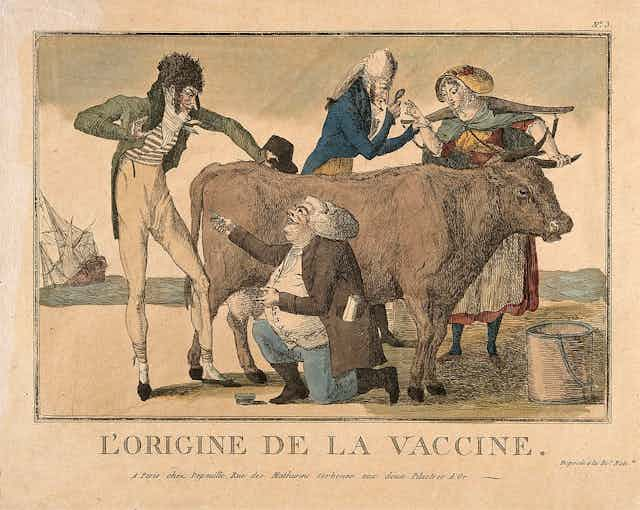
The concept of vaccination dates back to the late 18th century when Edward Jenner, an English physician, developed the first smallpox vaccine in 1796. Jenner observed that milkmaids who had been exposed to cowpox did not contract smallpox, leading him to experiment with cowpox inoculation. He used a knife to make some scratches on a boy’s arms and made the boy exposed to cowpox. After the boy recovered, he was exposed to smallpox and was not infected at all. Jenner’s great discovery finally saved humans from smallpox.
Basically, the vaccine contains some protein extracted from viruses, or the vaccine itself is made of dead or weakened viruses. After the injection, as the proteins are not a part of the human body, they will be discovered and noted by the human immune system. After being noted, some other cells from your immune system will produce antibodies and learn how to react next time. So when you’re actually infected with the virus, your immune system will be able to recognize and produce antibodies more quickly and help you recover before the virus has done too much damage. This sounds perfect, right? But after all, because of the nature of the virus, there are chances that people get directly infected with the disease right after injection. For example, there have been many cases of children having polio after inoculation in the past because polio vaccines are usually made of weakened viruses, so if the immune system is too weak, they might fail to eliminate the weakened viruses. However, as technology has been developing all the time, as long as you follow the doctor’s advice, it is now basically impossible to experience adverse reactions after vaccination.
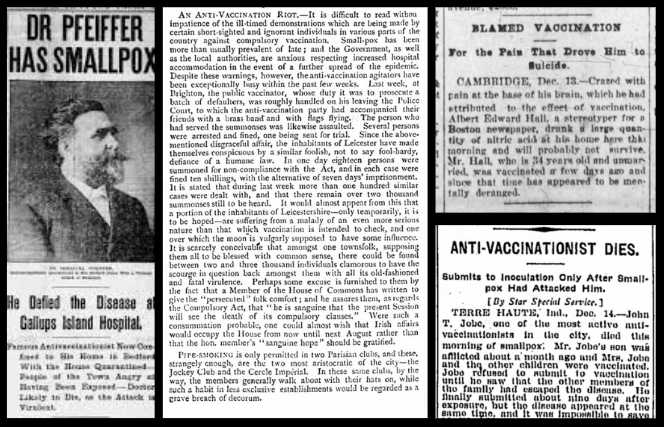
In the United States, resistance against vaccines arose in the late 19th and early 20th centuries. Religious objections, distrust of government mandates, and concerns over side effects made the popularization of vaccination harder and harder. In the early 20th century, smallpox spread rapidly in Boston and Cambridge in the US. The government began to require citizens to get vaccinated, or they would be fined and imprisoned. However, there were people refusing to be injected: a person named Immanuel Pfeiffer refused to be injected and exposed himself to smallpox voluntarily. Of course, he was infected. However, he luckily survived this fatal disease, and this made the anti-vaxxers more confident. Another citizen named Jacobson not only refused to be injected but also refused to pay the fine. He finally sued the state for invading his freedom. Jacobson argued that the mandatory injection of vaccine is against the basic freedom of the US citizens. However, he failed the debate, for his freedom has threatened the safety of the public. After this case was closed, many states carried out laws that didn’t 100% force children to inject vaccines but still required them to be vaccinated before going to public schools, which allowed people to refuse to have their children vaccinated for religious or medical reasons.
The Rise of Modern Anti-Vaccine Movements
The internet and social media have further amplified anti-vaccine rhetoric, allowing misinformation to spread rapidly. Common concerns include fears of vaccine ingredients, distrust of pharmaceutical companies, and government overreach. The COVID-19 pandemic intensified these debates, with vaccine mandates and misinformation leading to protests and hesitancy worldwide. As COVID-19 is taking millions of lives, people still refuse to get vaccinated for various reasons. Some people believe that vaccines are not necessary (and some of them soon died of COVID-19), while others trust conspiracies instead of medical support. Many argue that the medical companies producing vaccines have secret connections with foreign governments and try to kill them. As the technology of producing vaccines is pretty mature nowadays, it is not that wise to be skeptical about vaccination.
Reflection: Is freedom limited?
In almost every anti-vaccine case, the word anti-vaxxers use to defend themselves is “freedom”. They believed that as humans are born to be free, refusing to be injected is a part of their “freedom”. However, freedom always has its limitations, and should not threaten other people. If people are born with the freedom to live, they should not deprive that of other people. The freedom to give up freedom is no longer freedom.